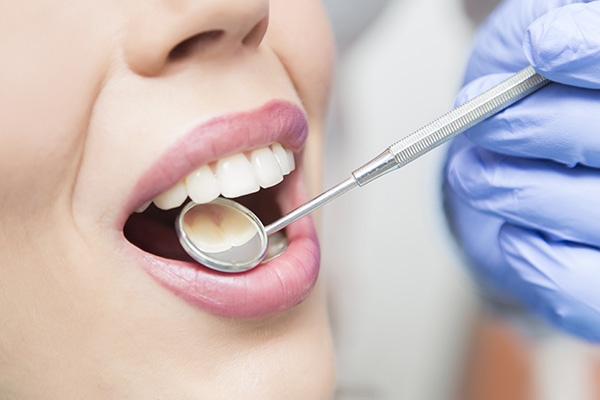
 General dentistry screens patients for oral cancer regularly. Your dentist performs this screening to look for any signs of cancer or precancer in your mouth. By detecting cancer early, there is a better chance of successful treatment. For many, an oral cancer screening is a routine part of the dental exam. General dentistry is more likely to perform the oral cancer screening if you have any of the risk factors associated with oral cancer. Here is a little more about what to expect.
What is oral cancer?
Abnormal cell growth in the mouth or throat can become oral cancer. Cancerous growths can happen on the lining of the lips, the inside of the mouth along the gums, the cheeks, and the tongue. Oropharyngeal cancer is when the growths develop at the base of the tongue, on the tonsils, on the soft palate, or along the walls of the throat. Not all growths that the dentist finds in the mouth are cancerous. The dentist can take a biopsy to determine if the growth is concerning.
The oral cancer screening
The dentist will use gloved hands to examine the patient’s mouth. During this general dentistry exam, the dentist is looking for any discolored patches or sores, as well as any unusual lumps in the mouth or throat. Some dentists also use a special light that can highlight any unhealthy tissue. There is also a special dye the patient can swish in their mouths that will cause abnormal cells to show up as blue. Patients should also talk to the dentist about any risk factors that would make the patient more likely to develop oral cancer.
Touch is important
An oral exam is not only a visual exam of the mouth. The dentist will feel the patient’s throat and face on the outside. However, it is also important for the dentist to feel the inside of the mouth. This is to detect any hard lumps of tissue. For many people, oral cancer is painless in the early stages, but a dentist can detect many cases. Not every abnormal growth turns out to be cancer. But early detection is valuable because catching oral cancer early gives the patient a much better prognosis.
Risk factors for oral cancer
Although many dentists will perform a screening on every patient, some risk factors can increase the chances of oral cancer developing. Men are twice as likely as women to develop oral cancer. Those over the age of 55 and those exposed to human papillomavirus (HPV) are also more at risk. Smokers and people who consume alcohol regularly are also at a greater risk independent of their age.
Oral cancer screening in general dentistry
If your dentist finds anything of concern, you will go back for a follow-up visit. You should make a list of questions you want to ask the dentist before going for your visit. Your dentist will walk you through the procedure and what the screening looks for. Getting an oral cancer screening is a good way to stay on top of your oral health.
Request an appointment or call Bliss Dental at 305-564-2530 for an appointment in our Kendall office.
Related Posts
Consistently visiting the same general dentist helps patients achieve better oral health outcomes and ensures personalized dental care. Building an ongoing relationship with a general dentist allows for a thorough understanding and effective monitoring of oral health over time. Additionally, health monitoring with a familiar general dentist supports early detection of dental issues, customized treatments,…
A general dentist relies on digital X-rays as a critical diagnostic tool to evaluate oral health, detect issues early, and guide treatment decisions. These high-resolution images offer detailed insight into structures not visible during a routine visual exam, making them essential for both preventive and restorative care. Digital X-rays are safer, faster, and more comfortable…
While professional cleanings and checkups with a general dentist are an essential part of your oral health, personal oral hygiene habits contribute to your long-term dental well-being. Individuals who prioritize oral hygiene between routine dental visits experience fewer dental issues and maintain healthier smiles. The following five strategies can help you effectively manage your oral…